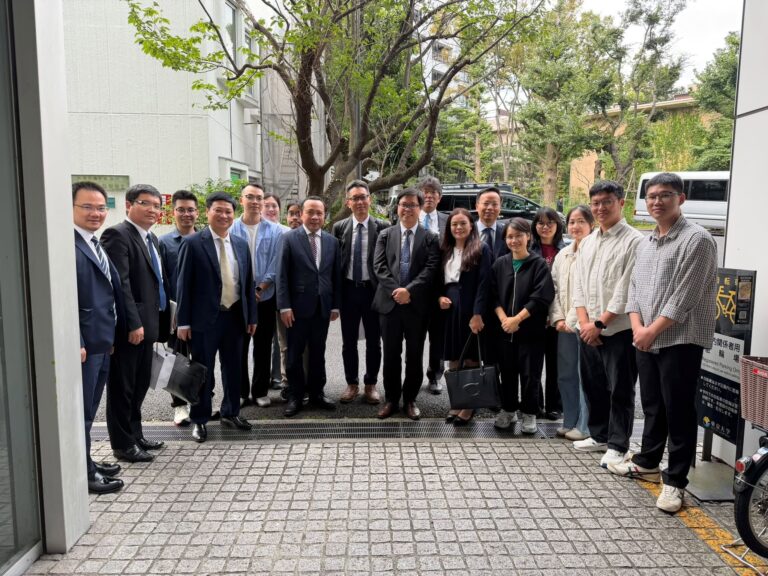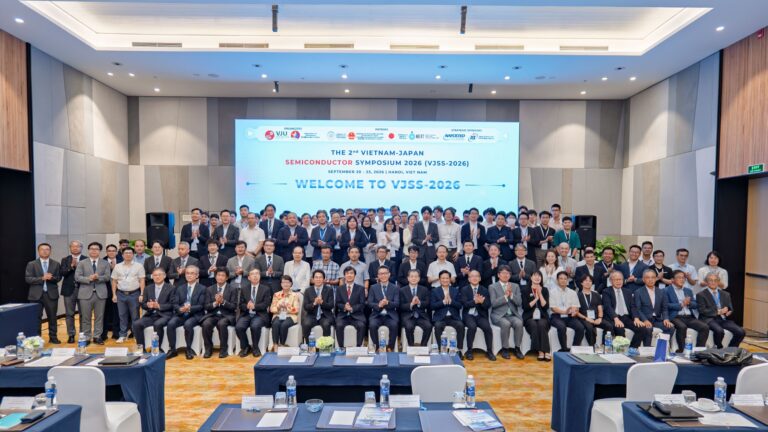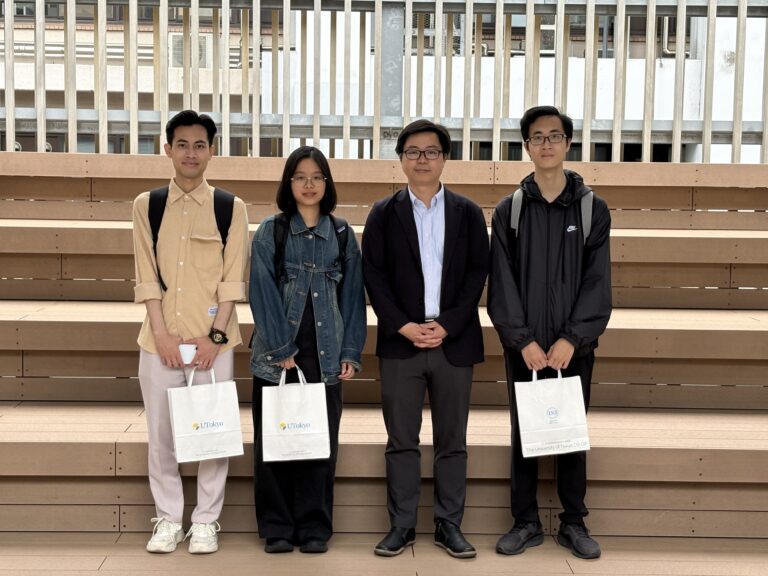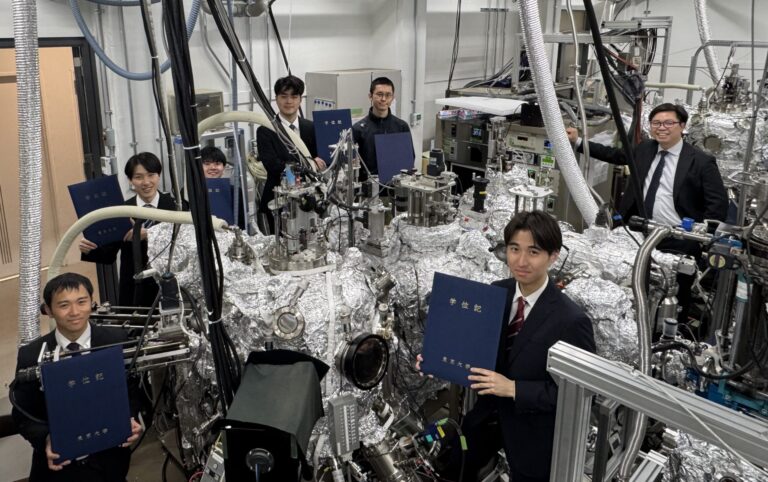
The NEXUS International Internship Program hosted three students from Hanoi University of Science and Technology from 1 March to 30 May 2026. During the three-month program, the students joined research laboratories at the University of Tokyo and gained hands-on experience in advanced materials research, device fabrication, characterization, and scientific discussion.
Nguyen Quynh Trang joined Matsuhisa Laboratory under Associate Professor Naoji Matsuhisa. Her project focused on fabricating electronically conductive hydrogels for wearable-device applications. She prepared hydrogel samples, measured their thickness, sheet resistance, and electrical conductivity, and investigated how different formulations affected both conductivity and mechanical properties. Through weekly group meetings, presentations, and one-on-one discussions with her supervisor, she gained valuable experience in independent research within an international laboratory environment.
Le Duc Nhat Anh joined Someya-Yokota Lab, where he worked on the fabrication of Janus electrodes using polyurethane nanofibers. The electrode structure included a conductive gold layer, a hydrophilic layer for liquid absorption, and a hydrophobic intermediate layer designed to prevent backflow. During the internship, he practiced electrospinning, material coating, gold deposition using a PVD system, plasma treatment, and measurements of liquid absorption and water contact angles. His work contributed to the development of skin-attached sensors that can reduce interference from sweat.
Nguyen Van Tinh joined Professor Hitoshi Tabata’s laboratory and worked on “Conducting Garnet Thin Films Using PLD via Ca–Zn Co-doped YIG Towards Magnon FET Applications.” His research focused on developing electrically conductive garnet materials for future magnonic devices. He participated in ceramic target preparation, pulsed laser deposition of thin films, and characterization using XRD, XPS, VSM, and current–voltage measurements. Weekly seminars and individual meetings with Professor Tabata provided opportunities to present results, receive feedback, and discuss research progress with laboratory members.
Across the three laboratories, the interns experienced Japan’s collaborative research culture, developed practical laboratory skills, and strengthened their motivation to pursue graduate study and research careers in materials science and engineering.
Read more about their experiences in these reports: